My Cargo Racks

Best Racks for Ford F-150

Compatible products for 2021 model years

100 compatible products verified

Fitment data verified by Jason Majewski, Automotive Engineer β€” sourced from manufacturer fit guides, installer databases, and cross-referenced across multiple sources.

Body Typetruck
Roof Typeno roof attachment
Factory RailsNo
Factory HitchYes
Max Roof Loadβ€”
Compatible Products100

Check Rack Compatibility

Search for a specific rack to see if it fits your Ford F-150

Quick filter:

Mounting Guide for Ford F-150

What you need to know before installing a rack system

Roof Mounting

no roof attachment

The 14th-generation Ford F-150 (2021+) presents a fundamentally different engineering challenge than SUVs: there are no factory roof rails, no fixed points, and no rain gutters on the cab roof. The cab roof is a large, unsupported panel β€” and traditional roof-mounted rack systems are limited to clamp-on solutions or the optional factory roof rail package. For SuperCrew cabs with the factory roof rail option: these are flush-style rails requiring Thule Evo Flush Rail (7106) or Yakima StreamLine towers. Not all F-150s have this option β€” verify before purchasing. For cabs WITHOUT factory rails (the majority): the Thule Evo Clamp (710501) with F-150-specific Fit Kit is required for cab-roof mounting. However, the more practical approach for most F-150 owners is to bypass the cab roof entirely and use bed-mounted rack systems. Bed racks represent the optimal solution for the F-150. Systems from Front Runner, Yakima OverHaul HD, and various manufacturers bolt to the bed rail stake pockets β€” factory-engineered attachment points rated for significant loads. No drilling, no modification to the cab. The bed rails are structural steel, not sheet metal. [ADD ORIGINAL PHOTO] [ADD PERSONAL EXPERIENCE]

Hitch Mounting

Factory hitch available

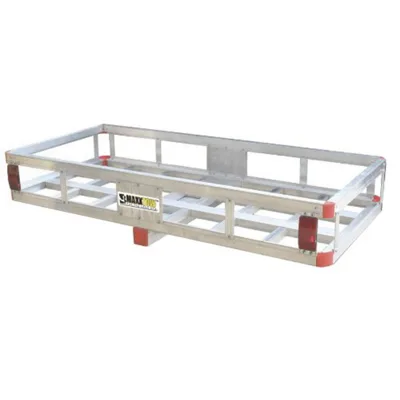
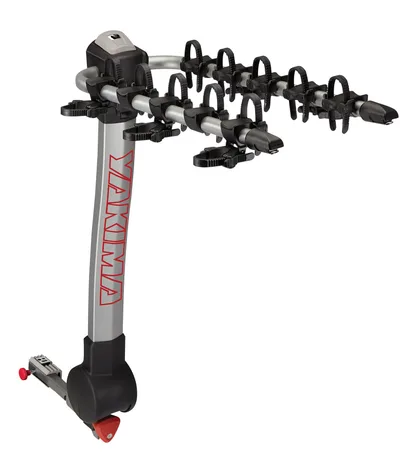
Every F-150 trim comes with a factory Class IV hitch receiver as standard equipment β€” this is the single biggest advantage the F-150 has over any SUV or crossover in our database. The factory hitch is rated at 12,000-14,000 lbs towing capacity (trim dependent) with 1,200-1,400 lbs tongue weight. This means every hitch-mount product works out of the box: bike racks (Thule T2 Pro XTR, Yakima FullSwing, Kuat NV 2.0), cargo carriers (CURT 18153, MaxxHaul 70107), motorcycle carriers (VersaHaul, MotoTote m3), and even RV accessories. The F-150's hitch receiver is 2-inch standard β€” some heavy-duty accessories require a 2.5-inch receiver available on higher trims. The Raptor and Tremor trims have modified rear approach angles that may affect swing-away carrier clearance in extreme off-road situations. For bike transport specifically: the hitch-mount path is superior to roof-mount on a truck. The vehicle height (76+ inches to roof) makes roof-loading impractical, and the factory hitch eliminates any installation cost.

Expert Notes

The F-150 challenges the assumption that you need a roof rack to carry gear. With a factory Class IV hitch and structural bed rails, the F-150 has two purpose-built mounting systems that neither require roof loading nor suffer from the height penalty of a full-size truck cab. The engineering rationale: the F-150's cab roof panel is stamped aluminum (since 2015). It is lighter than steel but has lower fatigue resistance under cyclical point loads. Ford intentionally does not provide factory roof rails on most trims because the aluminum roof panel was optimized for weight savings, not distributed rack loading. This is a deliberate engineering trade-off β€” weight reduction versus cargo versatility. For overlanders adding a rooftop tent: bed-mounted rack systems (elevated above the bed rails) provide a structurally sound platform that uses the frame-mounted bed structure rather than the cab roof. This is the correct approach for heavy static loads on an F-150. The Yakima EXO system deserves specific mention: it mounts to the hitch receiver and creates a swing-away cargo/bike platform below the tailgate. This is the only system that provides both cargo and bike transport without any roof or bed modification. [ADD PERSONAL EXPERIENCE]

β€” Jason Majewski, MyCargoRacks Technical Team

Common Mistakes to Avoid

Mistake #1: Buying cab-roof crossbars for an F-150 without factory roof rails. The majority of F-150s ship without the optional roof rail package. Without rails, you need either the Evo Clamp system with fit kit or β€” more practically β€” should pivot to bed rack or hitch-mount solutions. Mistake #2: Attempting to roof-mount a kayak or cargo box on a full-size truck without considering loading height. The F-150 cab roof is 76+ inches from the ground. Lifting a 50-lb kayak overhead to that height is impractical without a load-assist carrier (Thule Hullavator) or a loading ramp. Most F-150 owners are better served by bed-mounted kayak solutions. Mistake #3: Ignoring bed length when ordering bed racks. A 5.5-foot bed rack will not fit a 6.5-foot bed properly (mounting holes misaligned), and vice versa. Measure your bed β€” do not rely on cab style alone, as Ford occasionally pairs different bed lengths with the same cab. Mistake #4: Using aftermarket hitch-mount products rated for Class II receivers in the F-150's Class IV receiver. While they will physically fit, products designed for lighter vehicles may not have adequate tongue weight or anti-wobble features for a truck's ride dynamics. Use products rated for the full Class IV capability.

Installation Tips

For bed rack systems: the F-150 stake pocket locations are standardized across all bed lengths (5.5-foot, 6.5-foot, 8-foot). Bed racks insert into these pockets and clamp from below β€” typically a 30-45 minute installation with a 13mm socket and torque wrench. Critical measurement: verify your bed length before ordering. The SuperCrew typically pairs with a 5.5-foot bed, SuperCab with 6.5-foot, and Regular Cab with 8-foot. Bed rack manufacturers size their systems to these specific lengths. [ADD PERSONAL EXPERIENCE] For tonneau cover compatibility: many bed racks are designed to work with or without a tonneau cover. Verify clearance β€” a raised bed rack (12+ inches above bed rail) clears most folding tonneaus. A low-profile rack may conflict with hard-shell covers. If installing cab-roof crossbars on a model with factory rails: the flush rail channels accumulate road debris. Clean channels thoroughly before inserting T-bolts. Compressed air works better than wiping.

Compatible Products

Transport bikes

VelociRAX 7 MAX
91

VelociRAX

VelociRAX 7 MAX
Good Fit
VelociRAX 412 MAX
91

VelociRAX

VelociRAX 412 MAX
Good Fit
1Up USA Add-On
98

1Up USA

1Up USA Add-On
Good Fit
Thule Range
91

Thule

Thule Range
Good Fit
Yakima OnRamp
89

Yakima

Yakima OnRamp
Good Fit
VelociRAX 5 MAX
91

VelociRAX

VelociRAX 5 MAX
Good Fit

Haul kayaks or canoes

Other compatible products

Frequently Asked Questions

What is the best way to carry cargo on a Ford F-150?

The F-150 has three mounting systems: factory Class IV hitch (standard on all trims), bed rail stake pockets (structural steel), and optional cab-roof rails. For most owners, hitch-mount cargo carriers (CURT 18153) or bed rack systems are superior to cab-roof solutions. The truck's height makes roof loading impractical for heavy items.

Does the Ford F-150 have factory roof rails?

Most F-150 trims ship WITHOUT factory roof rails β€” it is an optional package. The aluminum cab roof was optimized for weight savings, not rack loading. Verify your specific truck before buying roof crossbars. If no rails present, use bed-mounted racks or the factory hitch receiver for cargo transport.

Can I put a bike rack on an F-150 without a bed rack?

Yes β€” the factory Class IV hitch receiver (standard on every F-150) accepts hitch-mount bike racks immediately. The Thule T2 Pro XTR, Kuat NV 2.0, or Yakima FullSwing mount in seconds. No installation, no modification. This is the simplest and most practical bike transport solution for any full-size truck.

How do I install a bed rack on a Ford F-150?

Bed racks insert into the factory stake pocket holes along the bed rails β€” standardized locations on all F-150 bed lengths. Clamp from below with a 13mm socket and torque wrench. Installation takes 30-45 minutes. Verify your bed length first: SuperCrew pairs with 5.5-ft, SuperCab with 6.5-ft beds typically.

Can I use a rooftop tent on a Ford F-150?

Yes, but mount it on a bed rack β€” not the cab roof. The F-150's aluminum cab roof was not designed for heavy static loads. Bed-mounted rack systems use the frame-connected bed structure, providing safe support for rooftop tents (80-160 lbs) plus occupants. Front Runner and Yakima OverHaul HD are popular bed rack choices for this application.

Does a bed rack work with a tonneau cover on an F-150?

Many bed racks are designed for tonneau compatibility. Raised bed racks (12+ inches above bed rail) clear most tri-fold and roll-up tonneaus. Low-profile racks may conflict with hard-shell covers. Verify clearance dimensions before purchasing. Some systems like Yakima OverHaul offer adjustable height specifically for tonneau coexistence.

What is the F-150 tongue weight capacity for hitch accessories?

The 14th-gen F-150 factory hitch supports 1,200-1,400 lbs tongue weight depending on trim and tow package. This exceeds every hitch-mount accessory in our database by a wide margin. A loaded hitch cargo carrier (CURT 18153 at 60 lbs + 500 lbs cargo = 560 lbs) uses less than half the available capacity.

Looking for more options?

Browse All Racks

Disclosure: MyCargoRacks.com is reader-supported. When you buy through links on our site, we may earn an affiliate commission at no extra cost to you. Prices and availability are subject to change. Learn more