

How to Stop Roof Rack Wind Noise and Whistling: 7 Fixes
Quick answer
A roof rack whistles when air peels off the crossbars in a steady rhythm. One rack seller's FAQ names the install as the most common cause, not the product: rubber strips cut short in the T-slot, end caps left unlocked, loose bolts. Check those and twist any flat strap first; they cost nothing. Then decide whether you need a fairing or new bars.

Disclosure: MyCargoRacks.com is reader-supported. When you buy through links on our site, we may earn an affiliate commission at no extra cost to you. Learn more
You bolt on a set of crossbars, merge onto the highway, and somewhere around the speed limit the car starts singing. First instinct is to blame the rack. Check the install first.
I've hauled gear on hitch carriers, roof racks, roof boxes and a basket for more than 20 years, and the most useful sentence on this whole subject isn't mine. Caddy Storage, an Australian rack seller, prints it in its roof rack FAQ: incorrect installation is the most common cause of noisy roof racks. Volkswagen says much the same in a service tip for its own accessory rack: incorrectly installed parts can cause wind noise. That's the people selling the bars telling you to check the setup before you blame the product. Believe them, and start with the free fixes.
One thing to know about where I'm standing. My own wind-noise experience comes from roof boxes, not bare bars. Where this piece gets into crossbar profiles and fairings, it leans on the rack makers' own instructions, and it says so every time.
And if you're still shopping, read why roof racks cost what they do before you assume the expensive bars are the quiet ones.
Why does my roof rack whistle?
Air hitting a crossbar can't wrap neatly around the back of it. It peels off one side, then the other, in a steady rhythm of little swirls. That rhythm is a tone. Physicists call it an Aeolian tone, and its pitch climbs as you go faster, which is why the whistle seems to arrive at one speed and change note at the next.
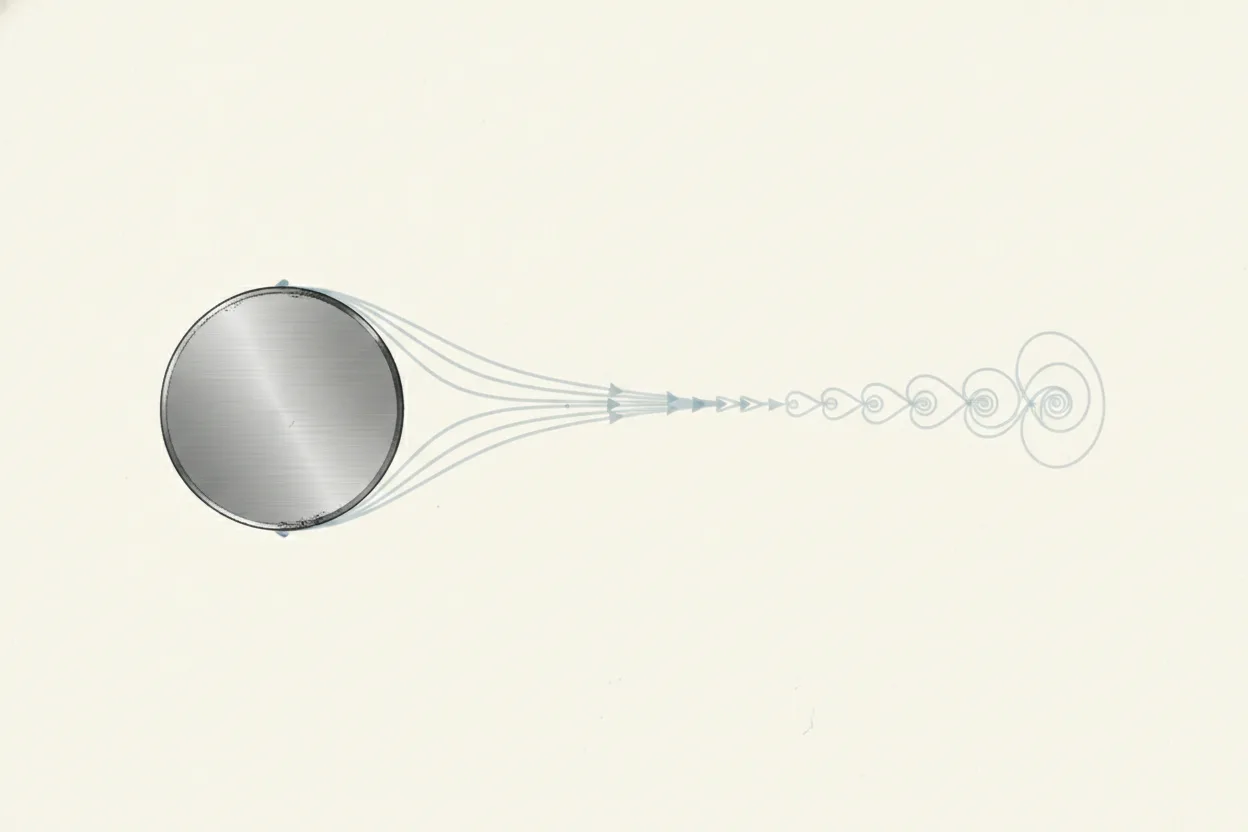
Anything that gives the air a sharp edge makes it worse. A T-slot channel with a gap in its rubber strip is a sharp edge. So is an open end cap, a flat strap, or the upright arm of an empty bike tray.
Here's the part that should get your attention even if the noise doesn't bother you. Jason Majewski, who writes our technical pieces, puts it plainly: a whistle is drag you can hear. The penalty is real and it runs in one direction: bare bars cost least, anything loaded on them costs more, and speed makes all of it worse. I won't hand you a percentage of my own. The one figure I'll pass on comes with its conditions attached: fueleconomy.gov says a large, blunt rooftop cargo box can cut fuel economy by around 10% to 25% at Interstate speeds (65 to 75 mph). That's the DOE's figure for a box, not bare bars, and not mine.
Diagnose it first: what the noise is telling you
Listen before you start wrenching. Different noises point at different parts.
| What you hear | Where to look | Fix to try first |
|---|---|---|
| High whistle that changes pitch with speed | Bare edge on the bar: rubber strip cut short, gap at the end, end cap open | Fix 1 — strips and end caps |
| Buzz or fast flutter | A flat strap vibrating in the wind | Fix 2 — twist the strap |
| Rattle or clunk over bumps | A loose foot, clamp or accessory | Fix 1 — re-torque |
| Steady hum or roar from the bars themselves | Bar profile and position | Fix 3 — move the bars, then Fix 6 or 7 |
| Low throb or drone | Load or bag flapping, an empty box buzzing | Fixes 4 and 5 |
Match the noise to its row before you buy anything.
The 7 fixes, cheapest first
Start at the top. The first four cost nothing.
1. Fix the install: strips, end caps and torque
Pull over somewhere safe and look at your bars. Aero and T-slot bars have a channel along the top, filled with a rubber strip. An open channel is the first suspect. etrailer's rack expert, answering a Rhino-Rack Vortex owner, named an open channel where the rubber inserts go as the most common cause of the whistling that owner described. Volkswagen's tech tip for one of its own accessory racks adds two details worth knowing. The strip can go in upside down, and a strip seated right sits almost flush with the top of the bar. Aero bars have a direction too: Volkswagen's go on with the more tapered edge toward the rear, like an airplane wing.
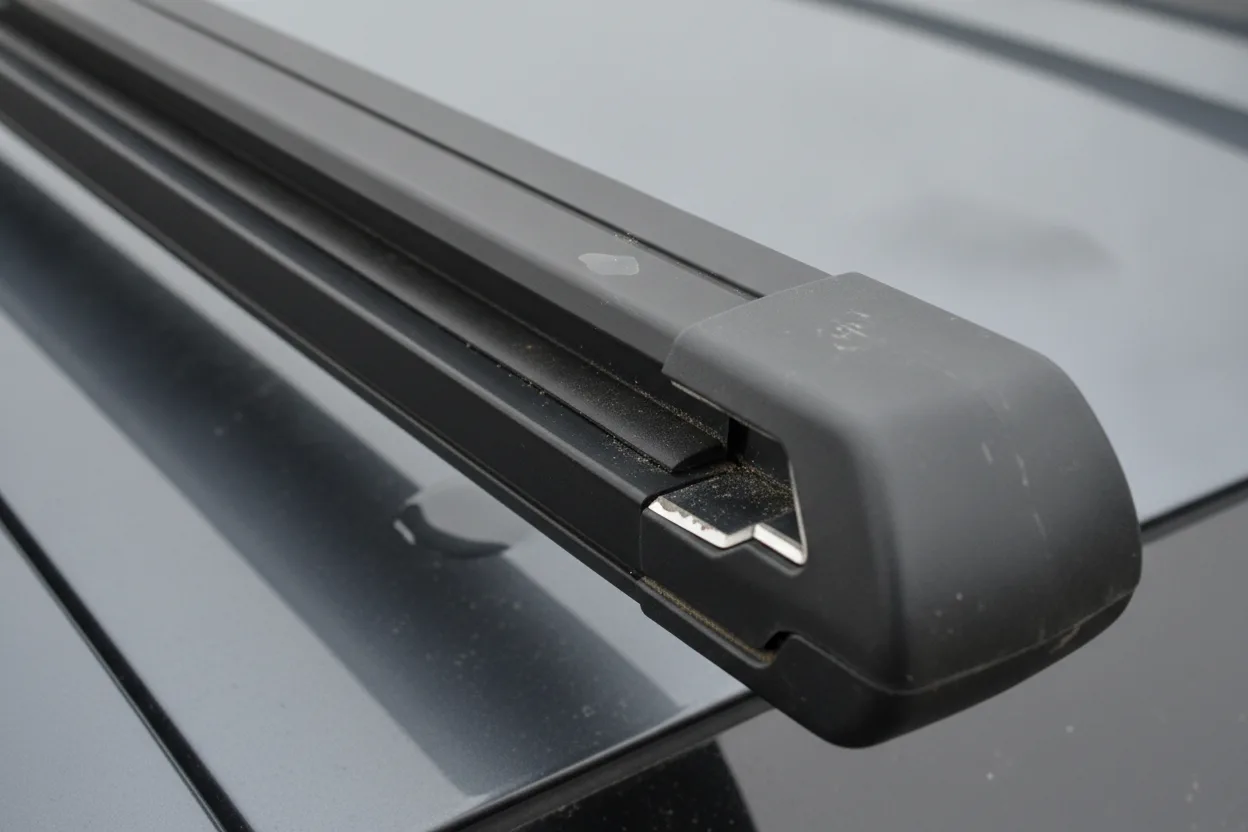
Then check that both end caps are in and locked before you drive.
Next, the feet. Loose hardware vibrates, and vibration makes noise. Re-torque every foot to the figure printed in its instructions. Not "snug plus a bit." The printed number.
That number is small. Thule's instruction for its Evo Raised Rail foot prints a torque figure that works out to about 35 inch-pounds, and Thule prints it in newton-meters, so convert before you grab the wrench.
One rack seller's FAQ says to check that all bolts and fixtures are tight every 620 miles or so (1,000 km in its FAQ) and before every trip.
My own habit comes from roof boxes, not crossbar feet, but it carries over. I tug every clamp and strap when I pull out of a gas station. It takes about thirty seconds. I've found box clamps half-latched and straps loosening that way, and never one that had let go. The check costs less than the noise.
I can't vouch for cord on a bar. The reply under it is the part worth keeping: that owner tried the cord and found the noise was vibration from an empty rack, not wind, which is why the tree below asks what kind of noise you hear before anything else.
2. Twist every strap
A flat strap in the wind flutters like a reed. Put a twist in every strap span that isn't touching anything, then cinch it down. That's not folklore. YourMechanic's guide to roof-strap noise says the same: put a twist in each strap to dampen the noise while the car is moving.
Tie off the loose tails as well; the same guide suggests tying two long loose ends together. A tail slapping the roof sounds like a rattle you can't find.
3. Move the bars
Bar position changes how the air hits them. I couldn't find a rack maker that publishes which position is quietest on which car, so treat this as an experiment, not a promise. Start by confirming the bars and pads sit where your fit guide puts them; etrailer's expert lists that as a check for a whistling rack.
The method is free. Pick a stretch of highway where you can hold a steady speed. Note the noise. Pull over, slide the front bar a short distance and run the same stretch again. Stay inside the spread your fit guide prints; quiet isn't worth an out-of-spec install.
Change one thing per run. Move the bar and re-torque a foot in the same stop and you won't know which one did the work.
4. Strip off what you're not using
Nobody wants to hear this one. Anything up there adds drag, loaded or not, and an empty carrier can make noise of its own. Empty boxes buzz and creak, and a full box damps its own hardware. I don't leave a box on empty unless I'm mid-trip or loading again the next day.
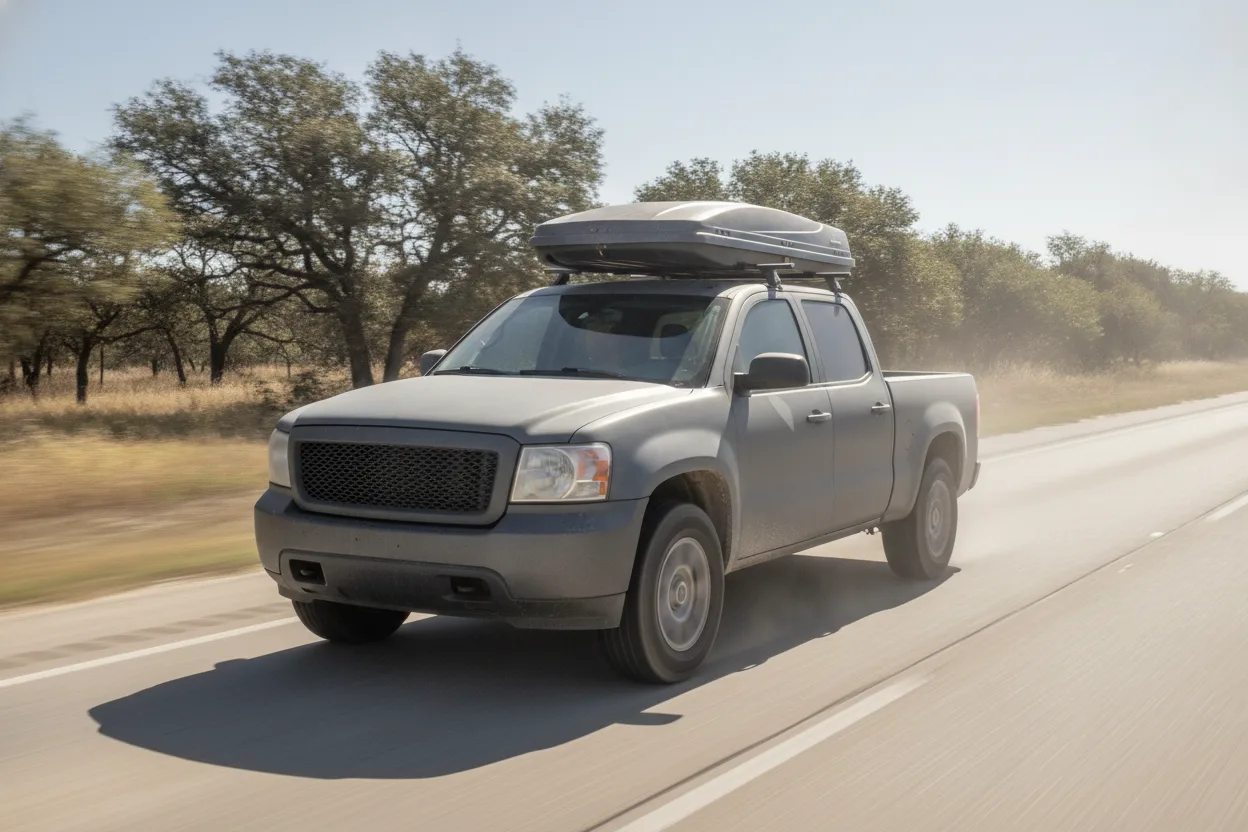
If the bars themselves aren't needed this week, take them off; it's the one fix guaranteed to work. For a box, fueleconomy.gov makes the money case plainly: removing an external cargo container when it's not in use saves fuel and money.
5. Pack low, tight and full
The higher the load sits, the more air it disturbs. Pack bags and boxes flat and centered between the bars, heaviest and tallest items in the middle. Cinch everything. A load that shifts or flutters is a load that makes noise, and a soft bag that isn't compressed can throb at highway speed.
If you're running a car-top carrier without a roof rack, the same rule applies with more force, because the bag sits right on the roof and every loose strap is in the wind.
6. Add a fairing
A fairing is a curved plastic deflector that clamps to the front crossbar and pushes air up and over the rack. Thule, Yakima and Rhino-Rack all sell one. Yakima and Rhino-Rack market theirs as noise fixes, and Thule pitches the AirScreen XT as "a quieter ride." None of their pages I checked gives a decibel figure. Neither do I, yet. See the test section below.
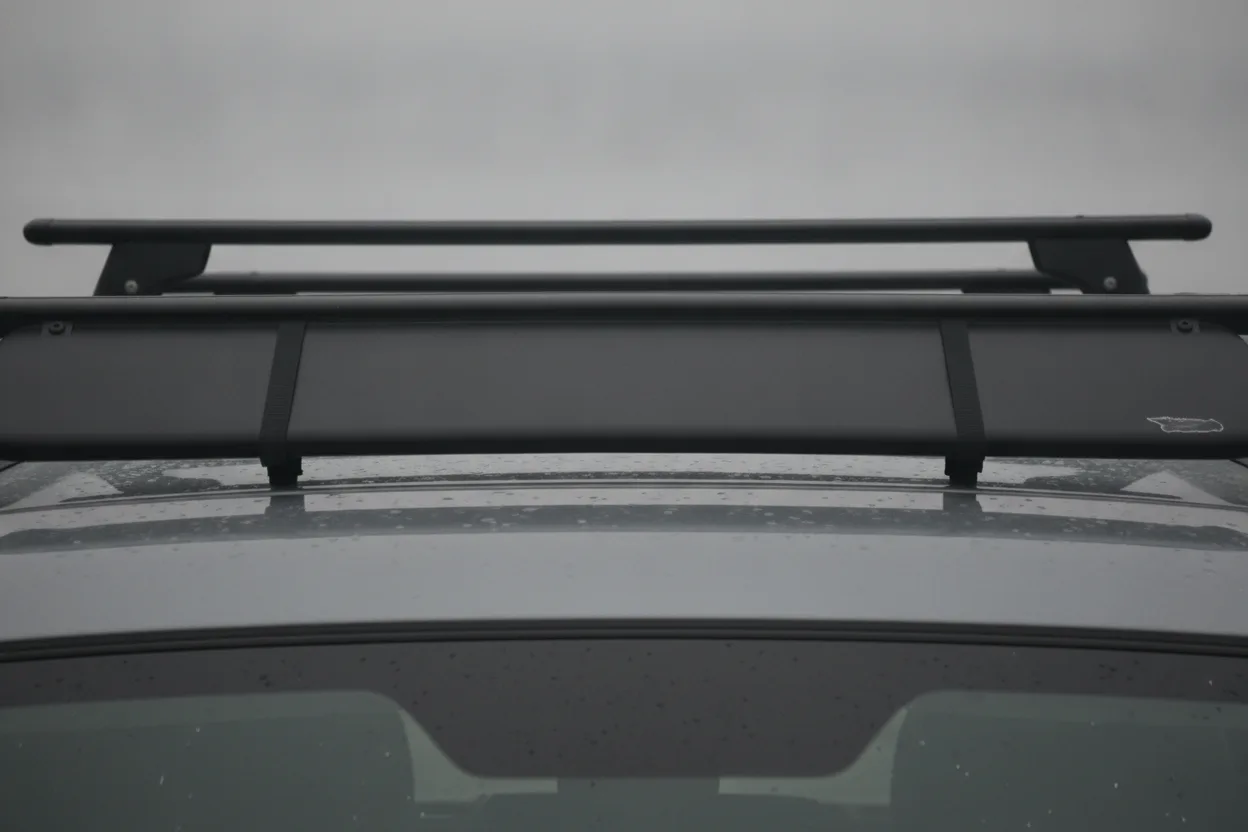
Thule's own instructions point at where a fairing can backfire: its AirScreen XT instructions say the WingBar Evo, WingBar Edge and AeroBlade Edge bars are already optimized for minimal noise, and that adding the fairing to them may actually increase the noise.
Before you order one, check two things: which bars the fairing is made to clamp to, and whether it would sit over a sunroof. Both are covered in the fairing section below.
7. Upgrade to aero bars
If you've done everything above and the bars still hum, or the rack lives on the car every day, this is the last step.
The makers are not shy about the claims. Thule calls the Thule WingBar Evo an aerodynamic system "for an exceptionally quiet ride" and credits what it calls WindDiffuser technology, which it says disturbs airflow to reduce noise and drag. Yakima's Amazon listing says its JetStream profile was designed in a wind tunnel to reduce noise and drag. Those are claims, not my measurements.
One data point from inside this site, and it's not mine. Jason Majewski ran Thule SquareBars on an SUV he used to drive and swapped them for aero bars because the whistle drove him out of the cab. That's one owner, one car. It lines up with the physics. Where aero bars sit in the order is question 8 of the decision tree below.
Price check before you commit. Thule lists the complete WingBar Evo system from $544.90 for feet and bars, with locks sold separately (manufacturer list price, checked Oct 2026; check the current price before you buy).
Before you spend money: walk the tree
Answer these in order and stop at the first one that sends you somewhere. Open each question for its answer. The first four never end at a checkout.
1. Is it a buzz, flutter or rattle rather than a whistle?
Yes: that's a strap or loose hardware. Twist the straps and re-torque the feet (Fixes 1 and 2). A fairing won't touch it, so don't buy one.
No, it's a whistle or a hum: go to question 2.
2. Are the strips seated full length, both end caps locked and every foot torqued to its printed figure?
No, or you're not sure: do Fix 1 before anything else. Caddy Storage calls bad installation the most common cause of noisy racks, and Volkswagen ties wind noise to incorrectly installed parts. Checking costs you one stop somewhere safe.
Yes, all checked: go to question 3.
3. Is anything on the bars you're not hauling this week?
Yes: take it off and drive the same stretch again (Fix 4). Empty trays, open clamps and empty boxes make their own noise.
No: go to question 4.
4. Do the bars need to stay on the car most days?
No: take them off between trips. It's the one fix guaranteed to work.
Yes: slide the front bar a short distance, inside your fit guide's spread, and re-test (Fix 3). Still whistling? Go to question 5.
5. Are your bars Thule WingBar Evo, WingBar Edge or AeroBlade Edge?
Yes: don't buy the AirScreen XT. Thule's own instructions say adding it to those bars may increase the noise. Thule says those bars are already optimized for minimal noise, so stick to the free fixes: strips, torque and bar position.
No: go to question 6.
6. Do you carry a soft roof bag, or is there a sunroof under the front bar?
Soft bag: rule out the AirScreen XT. Thule's instructions say not to use it with soft-sided cargo bags.
Sunroof: check where the fairing would sit before you order. Thule warns the sunroof may be unusable with the fairing on or near it, and that operating it against the fairing can damage it.
Either way, or neither: go to question 7.
7. Whose bars are you running?
Thule SquareBar Evo or AeroBlade (not Edge): the Thule AirScreen XT. Pick the size, S to XL, for your bar.
Yakima, round or most factory bars: the Yakima WindShield. Measure between your towers first; under 46 inches, etrailer points you to the 40-inch size.
Rhino-Rack Vortex, Euro or Heavy Duty: the Rhino-Rack RF2, plus the HD-FK1 kit on Heavy Duty bars. On another brand's bars, the bar can be no taller than 1-1/4 inches and no wider than 3-1/2 inches, per etrailer.
Prices and warranties are in the fairing table further down.
8. Still humming with a fairing on, or does the rack live on the car every day?
That's when aero bars come in (Fix 7). At the WingBar Evo price above, they're the most expensive step on this list by a wide margin, so they come last.
Noise by crossbar profile: what I still need to measure
I'm not going to fake this section. I couldn't find published cab noise readings for round, square and aero bars on the same vehicle at the same speeds. I haven't taken them either. Here is exactly how I'll do it.
The method. One fleet vehicle, the MyCargoRacks SUV. One stretch of highway, driven in both directions to cancel out the wind. A sound meter clipped at the driver's headrest, windows up, fan off. Three runs per condition, with the wind speed noted. A photo of the meter on every reading.
I haven't run it yet. Results go here when the test runs: no rack, round or square bars, aero bars, and the noisiest bars plus a fairing, at 55, 65 and 75 mph. No number goes in until it's been read off the meter and photographed.
What the results will decide. Whether aero bars earn their premium on noise alone. Whether a fairing does more for square bars than a bar swap would. And the speed at which each setup starts to whistle, which I couldn't find answered with a number for aftermarket bars.
The closest thing to a maker's figure I could find is narrow. A 2018 GM service bulletin for two of its 2018 crossovers describes a high-pitched whistle, mostly between 30 and 40 mph, that GM said may come from the original design of one accessory cross-rail. GM's fix was a replacement rail kit designed to cut the noise. That's one rail on two models, not a rule for your bars. What it does show is that a whistle doesn't wait for the interstate, and that sometimes the bar design itself can be the problem.
Until I run that test, one observation of my own, with a box rather than bare bars. When I ran a roof box on my F-150, the noise started in the mid-50s and turned into a hiss, a low whoosh, by 55 to 60 mph. By 70 I could feel crosswind push through the wheel. That's a recollection, not a measurement, and it's a box, not a bar.
Fairings that fit, and what they cost
Three fairings in our catalog. I haven't tested any of them. Everything here comes from the makers' pages and instructions, plus etrailer's listings where Rhino-Rack's own page wouldn't load. Read the table top down, because the fit rows decide this before the price row does.
| Thule AirScreen XT | Yakima WindShield | Rhino-Rack RF2 | |
|---|---|---|---|
| Bars it's made for | Thule WingBar Evo, WingBar Edge, AeroBlade, AeroBlade Edge, SquareBar Evo | Any Yakima bar, round or StreamLine, plus square and most factory bars | Rhino-Rack Vortex, Euro and Heavy Duty; etrailer calls its hardware universal |
| Fit check before you order | Pick the size, S to XL, for your bar | Measure between your towers; under 46 inches, etrailer points you to the 40-inch size | Bar no taller than 1-1/4 in or wider than 3-1/2 in, at least 7/8 in tall, legs at least 30-1/2 in apart |
| How it attaches | Clips on, no tools | Straps tightened with the included tool | Clamp-on brackets; Heavy Duty bars need the HD-FK1 kit |
| Sizes | S, M, L, XL | 34, 40, 46, 52 in | 38 in |
| Price I checked | L: $159.95, Thule list price, Oct 2026 | 46 in: $148.95 at etrailer, Nov 2026 | $139.99 at etrailer, Nov 2026 |
| Warranty | Limited lifetime, per Thule's warranty page | Limited lifetime | 5 years on Rhino-Rack's page in Oct 2026; etrailer lists limited lifetime |
| Maker's warnings | May add noise on WingBar Evo, WingBar Edge and AeroBlade Edge; no soft cargo bags; 80 mph max; can block a sunroof | None on the pages I checked | None on the pages I checked |
| Start here if you run | Thule SquareBar Evo or AeroBlade (not Edge) | Yakima, round or factory bars | Rhino-Rack bars, or slim bars inside its size limits |
The three prices sit within about twenty dollars of each other, so price shouldn't pick your fairing. Your bars pick it. Prices move, so check the current price on Amazon before you buy.
Thule AirScreen XT
The one to look at if you already run Thule bars, with a big caveat. It clips on without tools and attaches to Thule WingBar Evo, WingBar Edge, AeroBlade, AeroBlade Edge and SquareBar Evo with included hardware. It comes in S, M, L and XL. The size L lists at $159.95 (Thule list price, checked Oct 2026; check the current price before you buy).
Pros
- Tool-free clip-on install, with around-the-bar mounting that allows quick T-track access
- Four sizes, so you can match it to your bar length
- Fits Thule SquareBar Evo and AeroBlade, two of the listed bars Thule's noise warning doesn't name
- Thule lists its carriers, racks and accessories under a limited lifetime warranty
Cons
- Thule's own instructions warn it may increase noise on WingBar Evo, WingBar Edge and AeroBlade Edge bars
- Not for use with soft-sided cargo bags, per the same instructions
- Can interfere with a sunroof if it sits on or near it
- Thule lists fitment for its own bars only, and a maximum speed of 80 mph is printed in the instructions
Check current price on Amazon.
Yakima WindShield
The universal option. A band-style clamp fits any Yakima bar, round or StreamLine, plus square bars and most factory bars. It comes in 34, 40, 46 and 52 inch widths, sized to the distance between your towers, and Yakima backs it with a limited lifetime warranty. Yakima says it moves air up and over the rack to reduce drag and quiet wind noise. The 46-inch size was $148.95 at etrailer when I checked in November 2026. That's a retailer price, not a Yakima list price, so check the current price on Amazon before you buy.
Pros
- Fits round, square, Yakima aero and most factory bars
- Four widths
- Limited lifetime warranty
Cons
- You have to measure the distance between your towers to pick the right size before you order
- Yakima's pages I checked give no noise figure, so the benefit on your car is a guess until you drive it
- Needs the included tool to adjust, so it's not a pure clip-on
Check current price on Amazon.
Rhino-Rack RF2 Wind Fairing
A 38-inch fairing about 5 inches tall, for Rhino-Rack Vortex, Euro and Heavy Duty bars. Rhino-Rack's page listed a 5-year warranty when I checked in October; etrailer lists a limited lifetime warranty, so confirm it before you buy. It was $139.99 at etrailer when I checked in November 2026. Rhino-Rack's US site lists no fairing MSRP, so treat that as a retailer price and check the current price on Amazon.
Pros
- Fits Rhino-Rack's Vortex, Euro and Heavy Duty bars
- At least a 5-year warranty, by either listing
- Low profile at about 5 inches tall
Cons
- On another brand's bars, measure first: etrailer caps the bar at 1-1/4 inches tall and 3-1/2 inches wide
- Heavy Duty bars need the separate HD-FK1 fitting kit
- No noise figure on the pages I checked
Check current price on Amazon.
When NOT to expect a fairing to fix your noise
A fairing is a fix for one kind of noise: air hitting the front bar. It isn't built for the others. Skip it, or at least hold off, in these cases:
- Your bars are Thule WingBar Evo, WingBar Edge or AeroBlade Edge. Thule says outright that adding its AirScreen XT to those bars may increase noise. Start with strips, torque and straps instead.
- The noise is a buzz or a rattle. That's a strap or loose hardware. A fairing won't touch it.
- You're carrying a soft roof bag. Thule's instructions say not to use the AirScreen XT with soft-sided cargo bags at all.
- You have a sunroof under the front bar. The fairing can block it, and Thule warns of sunroof damage if you operate it with the fairing in the way.
- The rack is only on for a weekend. Take it off afterward instead. That cures the noise and saves the fuel.
- The whistle comes from the load. A tall, loose or half-empty load makes its own noise. Fix the packing first.
Physics wins every time. If the air has a sharp edge to sing across, a deflector up front won't cover an open channel or an unlocked end cap; fix those first.
Bottom line
Start with the setup: a rack seller and Volkswagen both point at installation first, and the setup fixes are free. Check the strips and end caps, torque the feet to the printed number, twist the straps, and take off what you're not using. Move the bars a short distance, inside your fit guide's spread, and test on the same road. If it still whistles after that, the fairing and aero-bar sections above lay out when each one makes sense.
If you end up comparing bar systems, the Thule side of that decision is in Thule's roof storage lineup, and the case for a box versus open racks for winter gear is in ski racks versus cargo boxes.
Got a rack that still whistles after all seven? Tell me the vehicle, the bars and the speed it starts at. Those are the setups I want on the test list.
Products Mentioned

TUYICN
TUYICN 41-Inch Roof Rack Wind Fairing

Thule
Thule AirScreen XT Wind Fairing

Yakima
YAKIMA, WindShield Fairing for Roof Racks, Quiet Noise, Reduce Drag

Rhino-Rack
Rhino-Rack 38" Wind Fairing (96.5cm) (RF2)

LT Sport
LT Sport Roof Rack Wind Fairing 43" Air Deflector Kit

Thule
Thule Wingbar Evo, 50"-Aluminum

Yakima
Yakima Set of 2 Roof Rack Crossbars, Rooftop Car, SUV, or Truck T-Slot Bars Compatible with StreamLine Tower – Bars Only, 50 Inch, JetStream

Rhino-Rack
Rhino-Rack Vortex Aero Cross Bar

Thule
Thule SquareBar Steel Load Bars (Set of 2)

Yakima
YAKIMA, CoreBar Aerodynamic Crossbars for Roof Rack Systems, Set of 2

INNO
INNO AERO Base BAR (1 Bar),Black, Aluminum, Made in Japan

Thule
Thule AeroBlade Edge Flush Mount Rack (1 Bar)

Malone
Malone AirFlow2 Aluminum Cross - 50"

CURT
CURT 18122 Black Steel Quick-Release Roof Rack Crossbars

Yakima
Yakima RoundBar Medium Steel Round Roof Rack Crossbars

BRIGHTLINES
BrightLines Aero Roof Rack Cross Bars for 2019-2026 Subaru Ascent
Brands in this guide
Our top picks
Price may vary. Prices and availability are subject to change.
Related articles
Keep reading
Deals Worth the Splurge
Hand-picked price drops on the racks and carriers we actually recommend. Updated weekly.
Shop today's deals →Newsletter
Get the best rack deals in your inbox
Weekly picks, price drops, and honest reviews. No spam.
Disclosure: MyCargoRacks.com is reader-supported. When you buy through links on our site, we may earn an affiliate commission at no extra cost to you. Learn more