

Quick answer
Horizontal kayak racks, also referred to as "saddle" racks, are one of the 4 main types of kayak racks. They're known for their stability and ease-of-use.
Disclosure: MyCargoRacks.com is reader-supported. When you buy through links on our site, we may earn an affiliate commission at no extra cost to you. Learn more
Price may vary. Prices and availability are subject to change.
I ran J-racks on my vehicle for years before I tried a saddle rack, and I'll be honest — I almost didn't bother. J-racks worked fine, I had my loading technique down to a science, and switching felt like an unnecessary hassle. Then a buddy lent me his Thule Compass saddle system for a two-week road trip to the Boundary Waters, and by the end of those two weeks, I was a convert. The stability, the ease of strapping, the way my wide touring kayak just sat in those cradles like it belonged there — it was a different experience entirely.
Saddle racks (also called cradle racks or horizontal carriers) aren't as popular as J-racks, but they deserve serious consideration, especially if you're carrying wider boats, if stability is a priority, or if you prefer loading your kayak right-side up. Let me walk you through how they work, where they shine, and whether they're the right choice for your setup in 2026.
The concept is straightforward. Four padded saddle cradles mount to your crossbars — two on the front bar and two on the rear bar. Your kayak sits right-side up in the cradles, hull down, in its natural orientation. The saddles are shaped to match the curve of a kayak hull, and they hold the boat securely with cam buckle or ratchet straps that loop over the deck and tighten down.
Unlike J-racks, which hold the kayak on its side at a 45-degree angle, saddle racks keep the boat flat and level. This has several practical implications that affect stability, loading, and compatibility with different kayak shapes.
I've used both extensively, so let me give you the comparison based on actual experience rather than marketing copy.
Saddle racks win here, and it's not close. A kayak sitting flat in contoured cradles has a lower center of gravity and more surface contact than a kayak standing on its side in a J-rack. This translates to less shifting, less swaying in crosswinds, and less vibration at highway speeds. For long drives — and I've done multi-day drives with boats on the roof — the stability difference is noticeable and reassuring.
I did a 1,200-mile drive from North Carolina to Minnesota with my touring kayak in a saddle system, and I checked the straps at every gas stop more out of habit than necessity. The boat didn't move a millimeter the entire trip.
I did a 1,200-mile drive from North Carolina to Minnesota with my touring kayak in a saddle system, and I checked the straps at every gas stop more out of habit than necessity. The boat didn't move a millimeter the entire trip. I've had J-rack-mounted boats shift slightly on similar drives, requiring strap adjustments. Not dangerous, but enough to make me pay attention.
J-racks win here. Because J-racks hold the kayak on its side, the footprint on your roof is narrower — you use less of the crossbar width. This leaves room on the other side for a second carrier, a cargo box, or a bike rack. A saddle system with the kayak sitting flat occupies more of the crossbar width, potentially using the full bar depending on your kayak's beam.
If you need to carry additional items on your roof alongside the kayak, J-racks are the more space-efficient choice. If the kayak is the only thing going up there, saddle racks give you a more stable and secure platform.
This one's more nuanced than it seems. Saddle racks feel easier to load because you're placing the kayak in its natural orientation — you don't have to rotate it onto its side like you do with a J-rack. But the actual lifting height is the same, and you're lifting the full width of the kayak overhead instead of the narrower side profile. In practice, I find them roughly equivalent in difficulty, with a slight edge to saddle racks for wider boats that are awkward to rotate.
Saddle racks provide significantly better hull support, especially for wider and flat-bottomed kayaks. The contoured cradles distribute the kayak's weight across a larger contact area, reducing pressure points. For sit-on-top kayaks, fishing kayaks, and recreational kayaks with flat or pontoon-style hulls, saddle racks are the clearly superior choice. J-racks put all the contact pressure on the hull's side, which is fine for most kayaks but not ideal for boats with complex hull shapes or scupper holes.
A kayak sitting flat on saddle racks has a lower profile than one standing on its side in J-racks. Less height above the roof means less wind resistance and less susceptibility to crosswinds. On long highway drives, this translates to slightly better fuel economy and a more stable driving experience. The difference isn't dramatic, but over a multi-hour drive, you'll notice it.
| Product | Type | Capacity | Price | Score |
|---|---|---|---|---|
| Thule Compass ★ | Saddle carrier | Up to 36" wide kayaks | $340-$380 | 93/100 |
| Yakima SweetRoll | Roller saddle carrier | Standard kayaks | $200-$230/pair | 89/100 |
| Malone SeaWing | V-shaped saddle carrier | Various hull widths | $180-$200/set | 86/100 |
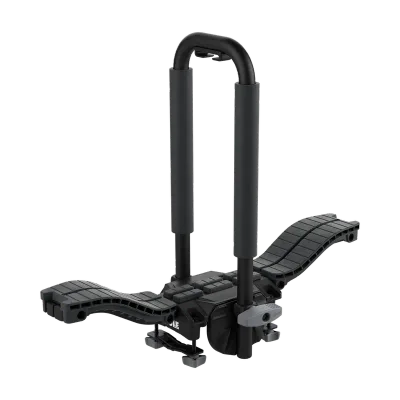
The Compass has been my primary saddle system for several seasons, and I keep coming back to it. The cradle padding is firm enough to support the hull without compressing, the strap system is intuitive, and the whole thing mounts to crossbars in about 15 minutes without tools. At $340-$380, it's mid-range pricing for excellent quality. It fits kayaks up to 36 inches wide, which covers the vast majority of recreational and touring boats.
| Product | Type | Capacity | Price | Score |
|---|---|---|---|---|
| Thule Compass ★ | Saddle carrier | Up to 36" wide kayaks | $340-$380 | 93/100 |
| Yakima SweetRoll | Roller saddle carrier | Standard kayaks | $200-$230/pair | 89/100 |
| Malone SeaWing | V-shaped saddle carrier | Various hull widths | $180-$200/set | 86/100 |
Price may vary.
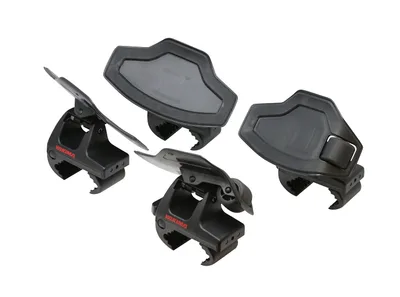
Yakima's SweetRoll is a roller-style saddle carrier — the cradles have built-in rollers that let you slide the kayak into position from the rear of the vehicle. This makes loading noticeably easier because you can rest the bow on the rear roller and push the boat forward instead of dead-lifting it directly overhead. The rollers also make adjusting the kayak's position on the rack much easier. It's priced at $200-$230 per pair, and I think the roller feature justifies the price for solo loaders.
Price may vary.
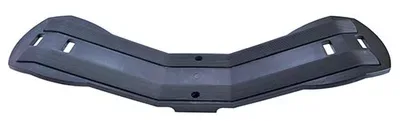
Malone's SeaWing is the budget pick in this category, and it's genuinely good for the money. The V-shaped cradles accommodate a range of hull widths, the padding is adequate (though not as plush as Thule's), and the included straps are decent quality. At $180-$200 for a set of four cradles, it's the entry point into saddle rack territory. If you're paddling 10-15 times per season and you don't want to spend $200+, the SeaWing is a solid choice.
Price may vary.
Rhino-Rack makes a saddle system that flies under the radar but deserves attention. The S-Series cradles have a wider profile than most competitors, making them particularly good for sit-on-top and fishing kayaks. The rubber padding is durable and grippy, and the mounting system is compatible with most crossbar shapes. Priced around $130-$180, it's a nice mid-ground between the Malone budget option and the Thule premium option.
Based on years of recommending racks to every type of paddler, here's my cheat sheet for who gets the most out of a saddle system.
Yes, get a saddle rack if:
Probably stick with a J-rack if:
If you're still deciding between the two styles, our overview of all kayak rack types can help you compare all the options side by side.
Saddle racks are straightforward to install, but getting the positioning right matters more than with J-racks. Here's what I've learned from years of setting these up.
Saddle racks don't get the attention they deserve. J-racks dominate the market because they're versatile and space-efficient, but for pure carrying stability and hull support, saddle systems are superior. If you've been using J-racks out of habit and you're not thrilled with the way your wide recreational kayak sits on its side at highway speeds, give saddle racks a serious look. The difference in stability and peace of mind might surprise you the same way it surprised me on that Boundary Waters trip.
The right rack is the one that makes you feel confident driving at speed with your kayak overhead and makes loading easy enough that it never becomes an excuse not to go paddling.
The right rack is the one that makes you feel confident driving at speed with your kayak overhead and makes loading easy enough that it never becomes an excuse not to go paddling. For a lot of paddlers — especially those with wider boats, longer drives, or expensive hulls they want to protect — that rack is a saddle system.
Best Overall Thule Compass | Best for Solo Loading Yakima SweetRoll | Best Value Malone SeaWing Saddle-Style Kayak Carrier | |
|---|---|---|---|
| Weight Capacity | 80.0 | 80.0 | 80.0 |
| Weight | 20.0 | 6.0 | 11.6 |
| Length | 32.0 | 12.0 | 27.5 |
| Width | 7.0 | 11.0 | 6.0 |
| Height | 19.0 | 11.0 | 4.5 |
| Material | Steel | Steel | Steel |
| Mounting | Roof Crossbar | Roof Crossbar | Roof Crossbar |
| Installation | Basic Tools | Basic Tools | Basic Tools |
| Noise Rating | Moderate | Moderate | Moderate |
| Value Score | 90 | 90 | 88 |
| Ease of Use | 90 | 88 | 86 |
| Build Quality | 92 | 87 | 78 |
| Score | 93/100 | 89/100 | 86/100 |
| Check Price | Check Price | Check Price |
Thule Compass
Yakima SweetRoll
Malone SeaWing Saddle-Style Kayak Carrier
Products Mentioned
Related articles
Hand-picked price drops on the racks and carriers we actually recommend. Updated weekly.
Shop today's deals →Newsletter
Get the best rack deals in your inbox
Weekly picks, price drops, and honest reviews. No spam.
Disclosure: MyCargoRacks.com is reader-supported. When you buy through links on our site, we may earn an affiliate commission at no extra cost to you. Learn more


