We use cookies and analytics to improve your experience. You can opt out at any time.
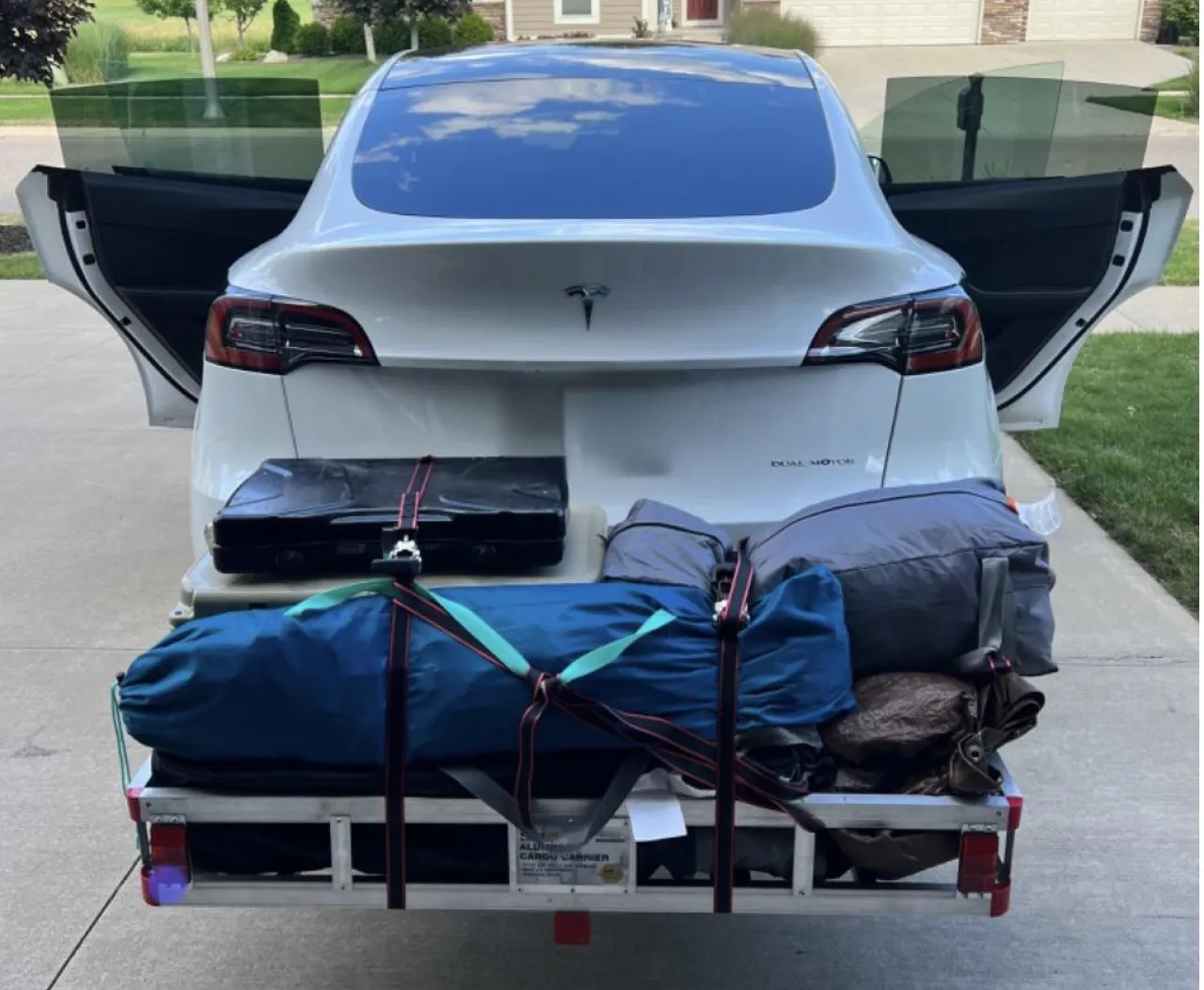
Quick answer
Hands-on 2026 guide to choosing a hitch cargo carrier: fit, safety, legal visibility checks, and practical loading advice from real use.
Disclosure: MyCargoRacks.com is reader-supported. When you buy through links on our site, we may earn an affiliate commission at no extra cost to you. Learn more
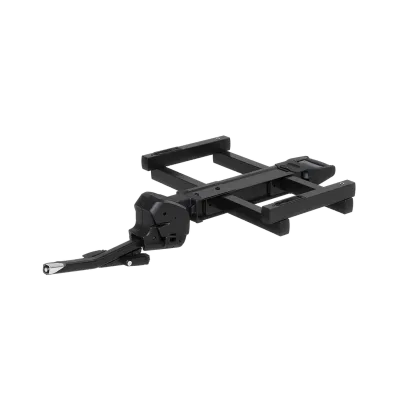
Price may vary. Prices and availability are subject to change.
I've been hauling gear on hitch carriers since the early 2000s, back when your options were a rusty steel tray from the auto parts store or... a rusty steel tray from a different auto parts store. The market today looks nothing like that. You've got aluminum platforms, enclosed boxes, modular stacking systems, and price tags that'll make your eyes water.
But here's the thing most review sites won't tell you: the carrier itself is only half the equation. The other half is understanding your hitch's tongue weight limit, keeping your plate and lights visible (yes, it's a legal issue), and figuring out whether you can actually load the thing by yourself at 6 AM in a campground parking lot.
I haven't run these five through a test rig — this isn't a lab, it's a driveway. What I've got is two decades of hitch-carrier use, a steel Curt that's been going on and off my F-150 since 2017, and the kind of forum-and-owner-review digging that tells you which trays still hold up after three winters. I'll tell you which ones I'd put my own gear on, and the one I'd only trust for a short, light haul.
Every hitch has two ratings: towing capacity and tongue weight. People obsess over towing capacity and completely ignore tongue weight. That's backwards for cargo carrier use.
Your cargo carrier sits on the tongue. It's a lever arm hanging off the back of your vehicle. Here's the math that matters:
I see people load 200 lbs of camping gear onto a carrier bolted to a Class I hitch and wonder why the back end sags and the steering feels vague. The carrier's weight rating might say 500 lbs. The receiver class ratings (I through V) are the real ceiling. Your hitch doesn't care what the carrier says. Physics wins every time.
Your hitch doesn't care what the carrier says. Physics wins every time.
Quick rule: weigh your loaded carrier on a bathroom scale before your first trip. Seriously. Put each bag on the scale. Add it up. Then compare that total plus carrier weight against your hitch's tongue weight rating. Not the towing rating. The tongue weight rating. They're in your owner's manual or stamped on the hitch receiver itself.
This decision is simpler than the internet makes it. Two questions:
Do you need weather protection? If yes, go enclosed or get a platform plus a waterproof bag. I've used the bag-on-platform combo for years. It's more versatile. You can ditch the bag for bulky items like coolers and firewood that don't care about rain.
Do you carry odd-shaped gear? Platforms win here. Lumber, camping chairs, oversized coolers, awkward duffels — a platform with a good ratchet strap setup handles all of it. Enclosed carriers have fixed dimensions. If your gear doesn't fit the box, you're out of luck.
Enclosed carriers shine for one specific use case: stuff you want locked and hidden. Road trips where you're stopping at hotels and don't want to unload every night. That's genuinely worth the trade-off in flexibility.
Aluminum carriers cost more. Usually 40-60% more. Are they worth it?
If you're loading and unloading by yourself: yes. A 30-lb aluminum carrier versus a 70-lb steel carrier makes a real difference when you're sliding it into the receiver solo. My back has opinions about this.
My back has opinions about this.
If you leave the carrier on permanently and price matters: steel is fine. Get one with a decent powder coat, hit the mounting points with fluid film once a year, and it'll last a decade. I know because I've done it. I bought a steel Curt carrier in 2017 — eight years on it now. It lives in the garage between trips, which helps, but it has seen plenty of rain on the highway. Surface rust freckles the mesh deck and the powder coat is worn through at the strap-contact points. The frame, the welds, the receiver collar? Structurally perfect. It still goes on the F-150 when I need it. Eight years is the only durability test that actually means anything, and that one's a pass.
Aluminum doesn't rust, but it does oxidize and the welds can crack if the carrier is poorly made. Cheap aluminum is worse than good steel. Spend the money on a reputable brand either way.
| Product | Type | Material | Weight | Price | Score |
|---|---|---|---|---|---|
| Thule Arcos Tilt Platform ★ | Platform | Aluminum | ~35 lbs | $630-$700 | 91/100 |
| Yakima EXO 2.0 | Modular | Mixed | ~40 lbs | $530-$600 | 91/100 |
| CURT 18153 | Platform | Aluminum | ~35 lbs | $180-$200 | 85/100 |
| Reese Explore 500 | Enclosed | Steel/Plastic | ~75 lbs | $130-$150 | 83/100 |
| MaxxHaul 70108 | Platform | Steel | ~50 lbs | $80-$90 | 82/100 |
Thule finally got serious about hitch carriers. The Arcos Tilt Platform is their large-format tray and it's the one I grab most often. Here's why.
The integrated ramp folds up from the back. You roll heavy coolers and bins right up instead of deadlifting them onto the platform. I loaded a 70-quart YETI by myself on this thing without throwing out my back. That alone justifies the price for me.
Build quality is Thule-grade, which means excellent aluminum construction and hardware that doesn't rattle loose. The attachment system has zero play in a 2-inch receiver with the included hitch bolt. Deck dimensions give you about 60 x 24 inches of usable space. The folding design tilts up 90 degrees against the vehicle when empty, so you can open your tailgate.
The downside: price. You're looking at around $630-$700, last I checked. That's steep for a cargo tray. But I've had mine for over a year with hard use, and it still looks and functions like new. Sometimes quality costs what it costs.
Tongue weight contribution: ~35 lbs empty. Very manageable on a Class II or higher.
Price may vary.
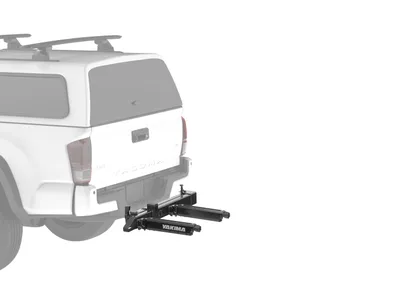
Yakima updated the EXO system and fixed most of my complaints about the original. The concept is a base platform that accepts swappable top units — cargo box, gear bin, bike rack, even a kitchen setup for overlanders.
The 2.0 version has a beefier base with less flex, better pin alignment for the top units, and the swing-away arm actually works smoothly now. The original's arm was stiff enough to need two hands and good leverage. The new one is legitimately one-handed operation.
This is the right choice if you switch between activities regularly. Ski trip? Snap on the cargo box. Mountain bike weekend? Swap to the bike mount. Camping? Gear bin. The modularity actually works, which is rare for systems that promise versatility.
The downside: the base unit plus one top unit runs $500-800 depending on configuration. Buying the full ecosystem gets expensive fast. And the proprietary attachment means you're locked into Yakima's modules.
Tongue weight contribution: ~40 lbs for base plus cargo box top. Plan accordingly.
Price may vary.
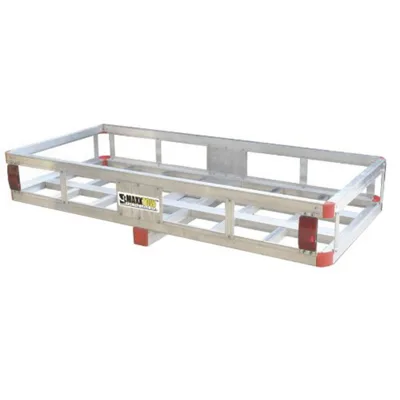
This is the working-class hero of cargo carriers. Steel construction, mesh deck, basic folding design, and a price around $90 that hasn't changed much in years.
I keep one of these at my buddy's lake house. It lives outside, gets used hard every summer, and has been going strong since 2021. The powder coat is rough in spots. There's surface rust on the mesh. It doesn't care. It holds coolers, firewood, and fishing gear without complaint.
For occasional use or if you're not sure cargo carriers are your thing, start here. If you decide you want something better after a season, you've risked under a hundred bucks finding out.
The downside: it's heavy (~50 lbs), the mesh deck rattles on rough roads unless you throw a rubber mat on it, and the folding mechanism is crude. No ramp. No tilt function. No finesse. It's a steel shelf bolted to your hitch.
Tongue weight contribution: ~50 lbs empty. Class II minimum recommended.
Price may vary.
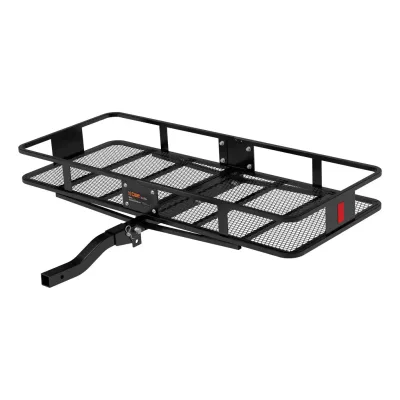
Curt has been making hitch accessories longer than some of its competitors have existed. The 18153 is their aluminum platform, and it hits a nice middle ground between MaxxHaul budget and Thule premium.
Aluminum build keeps it around 35 lbs. Anodized finish holds up well — mine has two years on it with minimal cosmetic wear. The side rails are tall enough to be useful, and the raised mesh deck keeps gear from sitting in puddles.
Rated for 500 lbs, though you'll hit tongue weight limits on most hitches well before that. The hitch pin and clip system is basic but effective. I added an anti-rattle hitch device for $15 and the setup is rock solid.
The downside: no ramp, no tilt function. The rails are welded, not folding, so it's a fixed footprint for storage. At $180-$200, it's right in the middle of the market.
Price may vary.
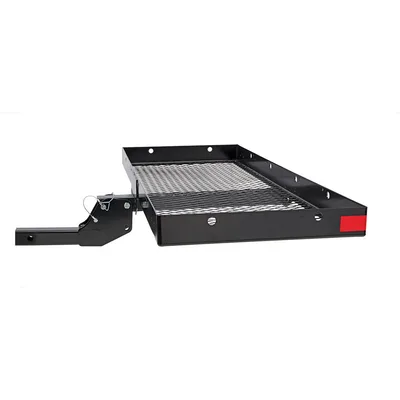
If you want a lockable enclosed carrier that doesn't cost a fortune, the Rambler is where I'd point you. It's got adequate space (roughly 48 x 22 x 22 inches interior), a keyed lock, and decent weather sealing.
I used one for a two-week road trip through the southeast. Left gear in hotel parking lots every night without unloading. That convenience factor is real. The lock isn't bank-vault security, but it stops casual theft and keeps honest people honest.
The downside: it's heavy. Around 75 lbs empty. You need a Class III hitch minimum, and even then, you're burning 75 lbs of tongue weight before you put a single item inside. The plastic shell can crack if you overload it or take a big pothole at speed. And the aerodynamics are... let's call them "not a priority in the design process." Expect a noticeable MPG hit — the same drag-and-wind-noise penalty you fight with a loaded roof box.
Price may vary.
Every single carrier in this list will obscure your license plate to some degree when loaded. Several will block your tail lights too. This is a legal problem in every state — a fix-it ticket in most, and the fine runs more than the parts that prevent it.
Solutions, ranked by what I actually use:
Don't gamble on this. A ticket costs more than all three solutions combined.
Marketing photos show two smiling people gently placing a perfectly packed duffel onto a carrier. Reality is you, alone, in a dark driveway at 5 AM trying to heave a 60-lb bag onto a platform that's hip height.
Tips from someone who loads alone constantly:
A hitch cargo carrier is one of the most practical upgrades you can make to any vehicle with a receiver hitch. More accessible than a roof box, cheaper than a trailer, and usable year-round.
My honest recommendation for most people: start with the MaxxHaul or Curt if you're unsure. Use it for a season. If you find yourself loading up regularly, upgrade to the Thule Arcos or Yakima EXO system. The budget options will tell you what features you actually want without a big financial commitment.
And please — sort out your plate and lights before your first trip. Not after the ticket. Check out our full hitch cargo carrier legality guide to make sure your setup is road-legal in your state.
Got a carrier setup that works well for you? I'd like to hear about it. Drop a comment below or send me a message. I read every one.
Best Overall Thule Arcos Tilt Platform 1.25" | Best Modular Yakima EXO SwingBase | Best Budget MaxxHaul 70108 Hitch Cargo Carrier 500 lbs | Best Mid-Range CURT 18153 Basket-Style Cargo Carrier | Best Enclosed Reese Explore 500 lbs Basket Cargo Carrier | |
|---|---|---|---|---|---|
| Weight Capacity | 500.0 | 500.0 | 500.0 | 500.0 | 500.0 |
| Weight | 37.5 | 68.5 | 29.0 | 42.0 | 35.0 |
| Length | 44.9 | 49.0 | 49.3 | 60.0 | 60.0 |
| Width | 27.6 | 34.0 | 22.5 | 24.0 | 20.0 |
| Height | 13.4 | 9.5 | 7.3 | 6.0 | 2.5 |
| Material | Composite | Steel | Steel | Carbon Steel | Steel |
| Mounting | Hitch Receiver | Hitch Receiver | Hitch Receiver | Hitch Receiver | Hitch Receiver |
| Installation | Basic Tools | Basic Tools | Basic Tools | Basic Tools | Basic Tools |
| Noise Rating | Silent | Silent | Silent | Silent | Silent |
| Security | High | None | None | None | None |
| Lock Included | Yes | — | — | — | — |
| Value Score | 85 | 90 | 89 | 88 | 86 |
| Ease of Use | 88 | 90 | 84 | 86 | 84 |
| Build Quality | 92 | 87 | 66 | 74 | 72 |
| Foldable | No | No | No | Yes | No |
| Score | 91/100 | 91/100 | 82/100 | 85/100 | 83/100 |
| Check Price | Check Price | Check Price | Check Price | Check Price |
Thule Arcos Tilt Platform 1.25"
Yakima EXO SwingBase
MaxxHaul 70108 Hitch Cargo Carrier 500 lbs
CURT 18153 Basket-Style Cargo Carrier
Reese Explore 500 lbs Basket Cargo Carrier
Products Mentioned
Related articles
Hand-picked price drops on the racks and carriers we actually recommend. Updated weekly.
Shop today's deals →Newsletter
Get the best rack deals in your inbox
Weekly picks, price drops, and honest reviews. No spam.
Disclosure: MyCargoRacks.com is reader-supported. When you buy through links on our site, we may earn an affiliate commission at no extra cost to you. Learn more