Quick answer
Discover the best vertical hitch bike racks for hassle-free transport of your bikes. Understand why vertical hitch options might be best choice for you.
Disclosure: MyCargoRacks.com is reader-supported. When you buy through links on our site, we may earn an affiliate commission at no extra cost to you. Learn more
Price may vary. Prices and availability are subject to change.
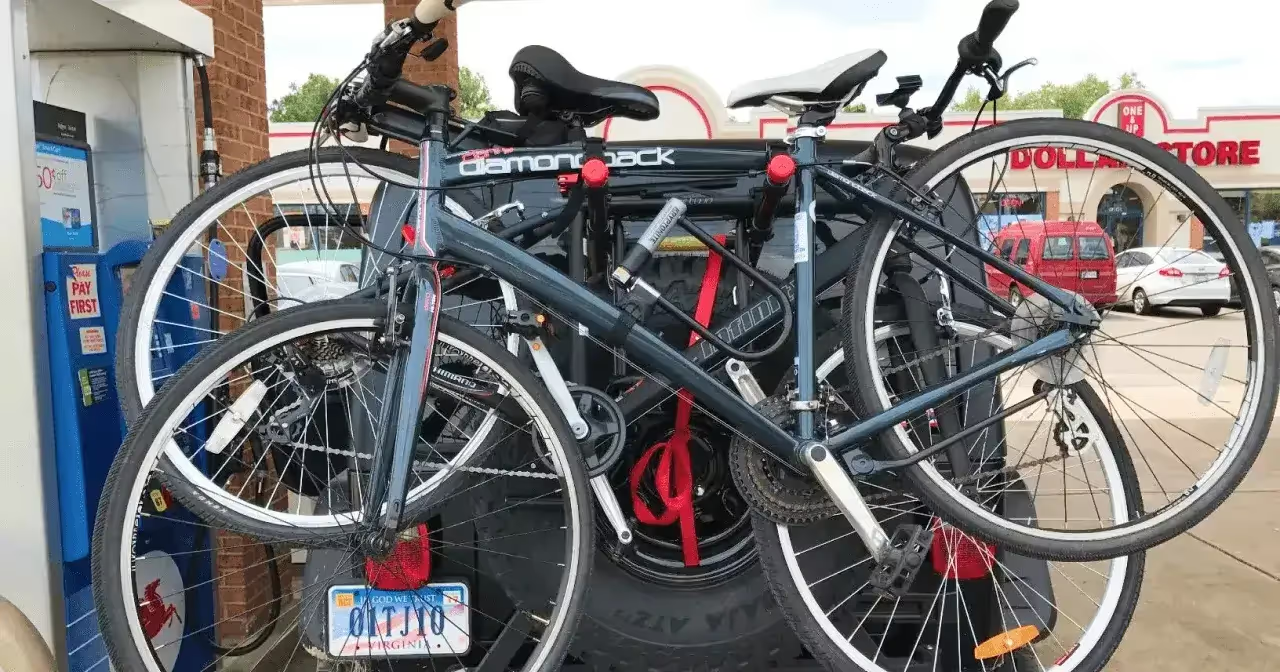
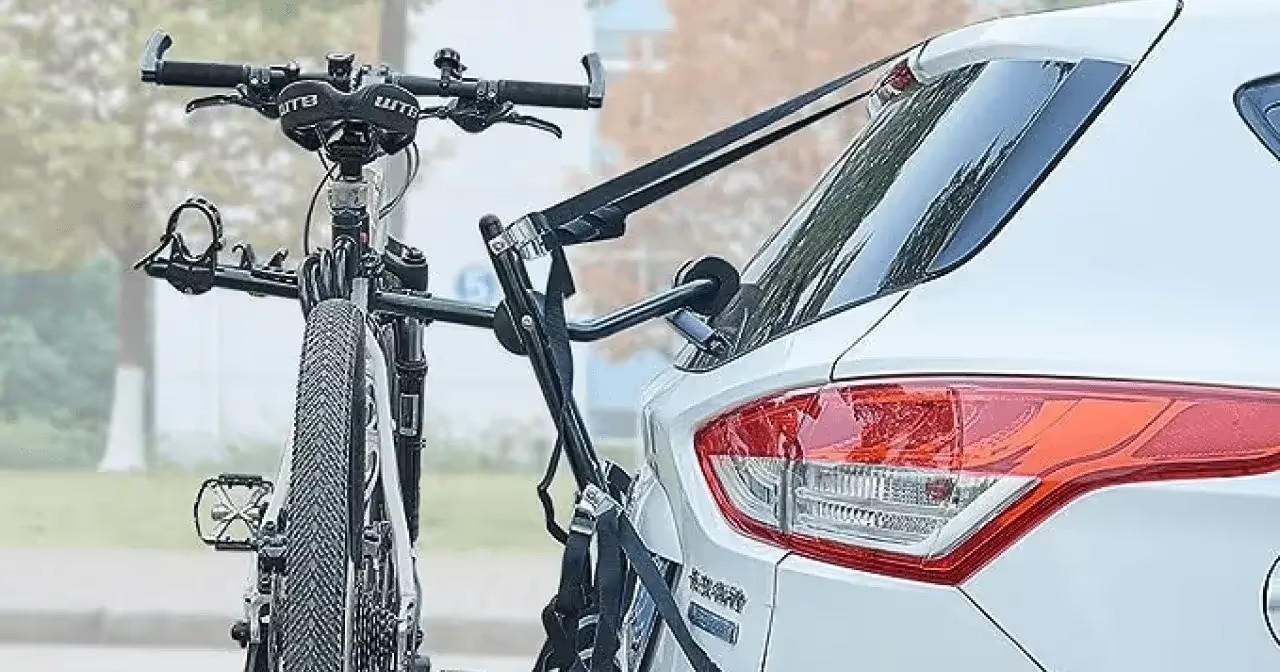
Vertical hitch bike racks — sometimes called hanging hitch racks — are the bike rack category that gets the least love in gear reviews, and I think that's unfair. Yes, platform racks have taken over the spotlight. Yes, the cycling industry has moved toward heavier bikes that favor platform designs. But vertical hitch racks still have a massive, loyal user base, and for good reason: they're lighter, more affordable, and for many riders, they're genuinely the better choice.
When a customer matched the right vertical rack to the right use case, they almost never came back unhappy.
I sold both types during my time at REI, and the return rates told an interesting story. Platform racks got returned because of sticker shock at checkout or because they were too heavy for the customer to lift onto the hitch. Vertical racks got returned because people bought them for bikes that were too heavy or too oddly shaped. Let's make sure you're in that group.
Before we get into specific products, you need to understand why you'd choose a vertical hitch rack over a platform one — and when you absolutely shouldn't.
A vertical hitch rack slides into your vehicle's hitch receiver (1.25-inch or 2-inch) and uses hanging arms or hooks that support your bikes by their top tubes. The bikes hang vertically, wheels pointing down, swaying slightly as you drive. Anti-sway cradles or straps minimize bike-to-bike contact and movement.
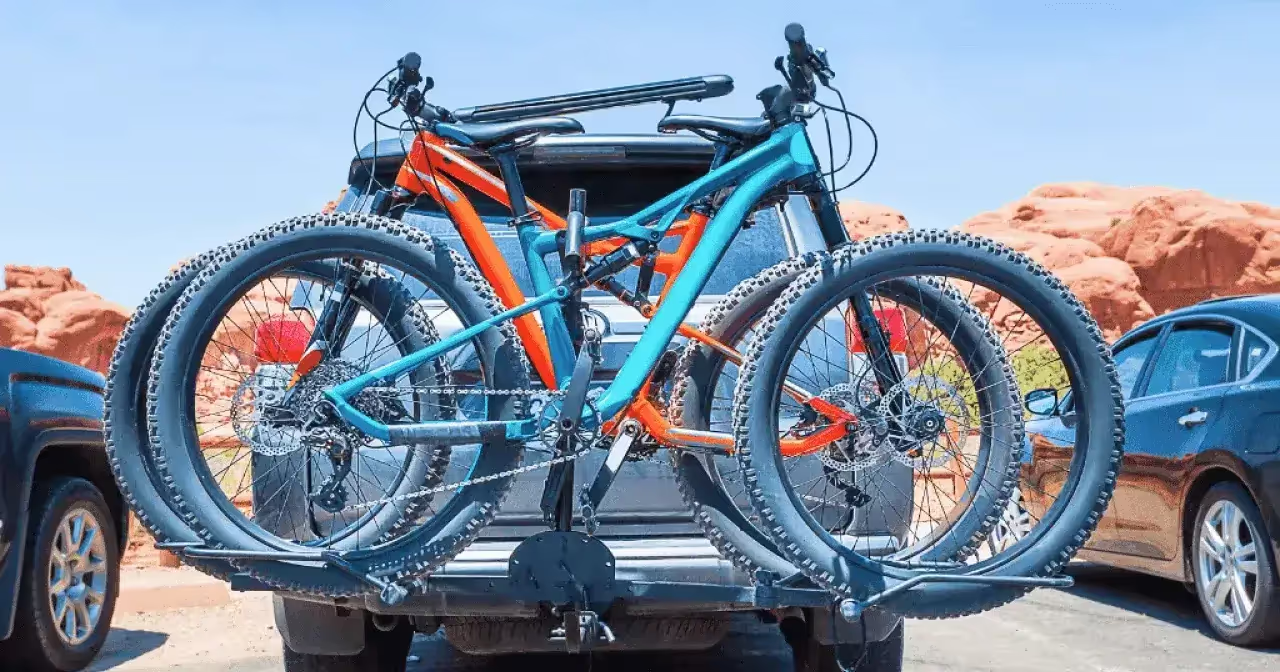
Platform racks, by contrast, support bikes by their wheels on a flat tray. The bike stands upright on the platform and is secured at the wheel or frame.
Based on what I saw work well over thousands of customer interactions, here's the profile of the happy vertical rack buyer:
If you're carrying e-bikes, carbon road bikes, or full-suspension trail bikes over 35 pounds, a platform rack is the safer investment. And if you don't have a hitch at all, check out our best trunk-mount racks guide for a hitches-free alternative.
I know — the name says "platform," but Thule's Helium line originally made its name as a lightweight hanging-style system, and their vertical-compatible models remain excellent. However, for a true vertical/hanging design, Thule's current lineup pushes you toward the Camber series. Let me be precise with what's actually available in 2026.
The Thule Camber 2 is the hanging hitch rack I'd put in most people's driveways. It fits both 1.25-inch and 2-inch receivers, holds two bikes at up to 35 pounds each, and has Thule's snug-tite hitch bolt system that eliminates wobble in the receiver. The hanging arms have soft rubber cradles that grip without scratching, and the anti-sway cages genuinely reduce bike movement.
What I like: The tilt-down feature lets you access your trunk or hatch without removing the bikes. The arms fold up flat when empty. At roughly $200, it's the sweet spot between quality and affordability.
What to know: The 35-pound per-bike limit is firm. I watched a customer try to load a 42-pound e-bike on a Camber, and the arm cradle couldn't grip it securely. Respect the weight rating.
Price may vary.
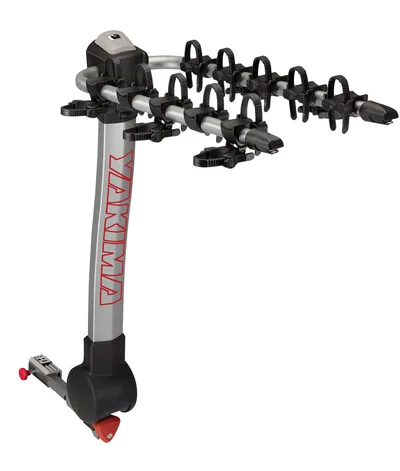
When families came into REI needing to carry four bikes, the Yakima RidgeBack 4 was my most common recommendation. Four bikes, anti-sway cradles on every arm, ZipStrip tie-downs for extra security, and the whole thing tilts down for rear access. It fits 2-inch receivers and handles up to 35 pounds per bike.
What I like: The SpeedKnob tool-free installation is genuinely fast — under two minutes from box to loaded. The arms space bikes well enough that a family of four with standard bikes can load up without the handlebars-tangling frustration that plagues cheaper four-bike racks.
What to know: Four loaded bikes on a hanging rack creates a lot of sway potential. Drive smoothly, especially on highway on-ramps and through parking garages. The rack weighs about 38 pounds, which is heavier than two-bike options but still manageable for most people. Price is typically $250–$300.
Price may vary.
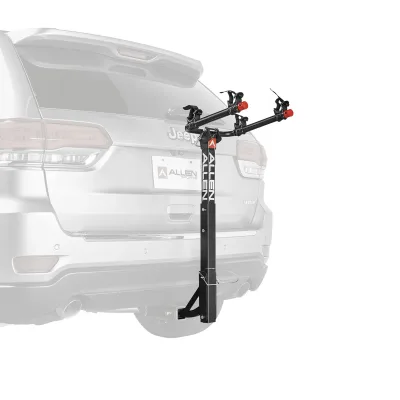
Allen Sports dominates the budget bike rack market, and their 522RR hanging hitch rack is the reason why. Under $100, it holds two bikes up to 35 pounds each in a 1.25-inch or 2-inch receiver. It's simple — there's no tilt feature, no quick-release anything, no bells or whistles. It's steel arms with vinyl padding, a hitch bolt, and carry arms.
What I like: It works and it's cheap. For the family that rides a few times a season and needs basic, functional bike transport, spending $80 instead of $300 makes sense. I sold hundreds of these without regret.
What to know: The vinyl padding will wear through faster than rubber cradles on premium racks. The lack of anti-sway cradles means more bike-to-bike contact on bumpy roads. There's no tilt feature, so you lose trunk access with bikes loaded. You get what you pay for — but what you get is adequate for light, occasional use.
Price may vary.
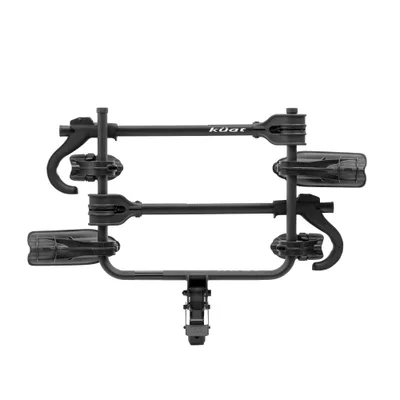
If the install-and-remove cycle is your primary concern, the Kuat Transfer V2 is worth the premium over budget options. It weighs just 24 pounds for the two-bike version, making it the lightest hanging hitch rack I've handled. The cradle design is a step above most competitors, with integrated anti-sway and a hand-tightening hitch cam that locks the rack into the receiver without tools.
My mom — who is 63 and not interested in wrestling with heavy equipment — could install this by herself. That's the benchmark I use for "lightweight and user-friendly," and the Transfer V2 passes it.
What to know: Price is around $200–$230, which is premium for a hanging rack. If you're leaving it on the hitch permanently, you're paying extra for a lightweight benefit you're not using. Also, two-bike capacity only — there's no four-bike version in this chassis.
After years of watching people install hanging racks in the REI parking lot, here's what I'd tell every buyer:
The frame contact issue is real but manageable. Hanging arms grip the top tube, and over time — especially without protective padding — this can wear through paint or clear coat on your bike frame. Using frame protectors (foam tubes or neoprene wraps around the top tube where the cradle contacts) eliminates this risk for about $10.
On the vehicle side, the hitch receiver takes the load, so there's minimal risk of car damage — unlike trunk-mount racks that sit against your paint. The biggest vehicle concern is the hitch bolt loosening and the rack wobbling, which can oval out the hitch receiver pin hole over time. Periodic tightening prevents this completely.
| Feature | Yakima RidgeBack 4 | Allen Sports Deluxe 2-Bike Hitch | Kuat Transfer v2 2-Bike |
|---|---|---|---|
| Bike Capacity | 4 | 2 | 2 |
| Weight Limit | 35 lbs/bike | 35 lbs/bike | 120 lbs total |
| Rack Weight | 41.1 lbs | 18 lbs | 37 lbs |
| Tilt Feature | Yes | No | Yes |
| Anti-Sway | Yes | No | Yes |
| Price Range | $250–$300 | Under $100 | $200–$230 |
| Best For | Families with 4 bikes | Budget-conscious, occasional use | Lightweight, easy install/remove |
Vertical hitch bike racks aren't the flashy choice, and they're not the right choice for every rider. But for families with standard bikes, budget-conscious cyclists, and anyone who values lightweight simplicity, they remain a smart, practical category in 2026. The Thule Camber 2 is my default recommendation for most buyers. The Yakima RidgeBack 4 is the family hauler. The Allen Sports 522RR is the guilt-free budget pick. And the Kuat Transfer V2 is the one you buy when installation ease is the top priority.
Match the rack to your bikes' weight, think about how often you'll install and remove it, and don't skip the hitch pin lock. If you're still weighing your options across all rack categories, our complete guide to bike rack types will help you figure out whether a hitch rack — vertical or platform — is even the right starting point for your situation.
Best for Four Bikes Yakima RidgeBack 4 | Best Budget Pick Allen Sports Deluxe 2-Bike Hitch Rack | Best Lightweight Kuat Transfer v2 2-Bike | |
|---|---|---|---|
| Weight Capacity | 100.0 | 105.0 | 120.0 |
| Weight | 41.1 | 18.0 | 37.0 |
| Length | 44.0 | 24.3 | 31.0 |
| Width | 12.0 | 13.8 | 30.0 |
| Height | 16.0 | 3.7 | 6.0 |
| Material | Steel | Steel | Steel |
| Mounting | Hitch Receiver | Hitch Receiver | Hitch Receiver |
| Installation | Basic Tools | Basic Tools | Basic Tools |
| Noise Rating | Silent | Silent | Silent |
| Security | Basic | Basic | None |
| Value Score | 84 | 87 | 90 |
| Ease of Use | 84 | 82 | 90 |
| Build Quality | 87 | 68 | 93 |
| Score | 85/100 | 79/100 | 82/100 |
| Check Price | Check Price | Check Price |
Yakima RidgeBack 4
Allen Sports Deluxe 2-Bike Hitch Rack
Kuat Transfer v2 2-Bike
Products Mentioned
Related articles
Hand-picked price drops on the racks and carriers we actually recommend. Updated weekly.
Shop today's deals →Newsletter
Get the best rack deals in your inbox
Weekly picks, price drops, and honest reviews. No spam.
Disclosure: MyCargoRacks.com is reader-supported. When you buy through links on our site, we may earn an affiliate commission at no extra cost to you. Learn more